Search “top app marketing company” and you’ll get dozens of lists claiming to rank the best. Most of them are not built the way you’d expect. They’re often based on who paid for placement. Or who has the biggest ad budget. Or who submitted their own listing. Not who actually delivers results for clients.
If you pick an agency off one of these lists without digging deeper, you could end up with a company that looks good on paper. But has never driven measurable growth for an app like yours.
At Remarkably Different, we’ve seen this problem from the other side. We know what real results look like. And we know how different that is from what most rankings measure.
How “Top” Lists Are Usually Built
Most of these lists are not independent reviews. Here’s what actually drives the rankings you see:
- Paid placements. Many directories charge agencies a fee to appear higher. The ranking reflects budget, not performance.
- Self-submitted profiles. Some lists let agencies write their own descriptions. And pick their own case studies. With no verification.
- SEO strength, not client results. An agency can rank high just because they are good at SEO for their own site. Not because they grow other people’s apps well.
- Vague or missing criteria. Few lists explain how they rank agencies. Without clear criteria, “top” just means “included.”
This is why a list alone is risky to trust. It tells you who is good at marketing themselves. Not who is good at marketing your app.
The Big Agency Problem Nobody Talks About
Here’s something worth knowing before you sign with a well-known name. Big marketing agencies charge a premium. Their service fees are often much higher than smaller, specialized teams. Yet many of them still rely on the same traditional playbook. Google ads. Meta ads. Basic UAC campaigns.

There is nothing wrong with these platforms. They work. But they are not creative. They rarely try anything that could make an app go viral. They optimize what already exists. They don’t build new demand.
This happens for a simple reason. Big agencies handle many clients at once. If one client leaves, another one takes their place. There is less pressure to go above and beyond for any single app. Your growth becomes one line item in a much bigger operation.
Smaller, rising agencies work differently. Every client matters more, because there are fewer of them. This often pushes agencies like Remarkably Different to try harder. To use every resource available. To find creative paths that bigger agencies skip.
You Are Not Just a Line Item
At a giant agency, you are one name on a long client roster. If you walk away, the agency barely notices. Their revenue keeps flowing from hundreds of other accounts. You are easy to replace, and they know it.
At Remarkably Different, that math doesn’t work the same way. We have fewer clients by design. Your growth directly shapes our growth. When your app succeeds, it reflects on us. When it struggles, we feel that too. This isn’t outsourced to whoever happens to be free that week. You get a specialist who is personally tied to your results, not just your invoice.
Marketing is shifting. The biggest budget no longer wins by default. The sharpest, fastest, and most focused teams do.
Where Your Marketing Budget Actually Goes
Here’s something most clients never see. A large chunk of what you pay a major agency doesn’t touch your campaigns at all. It covers office leases. Layers of management. Internal overhead that has nothing to do with your app.
Only a small slice of your monthly fee actually goes toward the work that grows your app.
Remarkably Different doesn’t carry that weight. We run lean. No massive office costs. No stacked management layers eating into your budget. This doesn’t mean we cut corners or charge less to compete. It means more of what you pay goes straight into strategy, execution, and results. You get more value for the same dollar, not a discount for less service.
Who Actually Runs Your Campaign
Most first meetings with a large agency go smoothly. You sit across from a senior director. Sharp, experienced, easy to trust. It feels like you’re in good hands.
Then you sign. And that senior person disappears from your day-to-day. Your account gets passed to a junior team member. Someone new to the industry, managing a dozen or more accounts at once, most of which they barely have time to understand. This isn’t a rare exception. It’s the standard model at most large agencies.
You end up paying for senior-level expertise, but receiving entry-level attention. At Remarkably Different, the person who sits with you in that first call is the same person who builds and leads your strategy, and watches your numbers every week. No hand-off. No hidden junior team. Just one accountable expert, from start to finish.

Red Flags to Watch For on a Sales Call
Some warning signs show up before you ever sign a contract. Watch for these during your first conversation with any agency:
- Guaranteed results. No one can promise a specific CPI or install number before seeing your app and audience. Guarantees this early are a sales tactic, not a strategy.
- No questions about your app. A real growth partner asks about your retention, your users, and your goals before pitching anything. If they skip straight to a proposal, they don’t know your app yet.
- Vague answers about who does the work. Ask directly who will manage your account day to day. If the answer is unclear, or changes depending on who you ask, that’s worth noting.
- Pressure to sign fast. Real agencies are fine with you taking time to decide. Urgency tactics usually mean they need to hit a sales quota, not that you’re missing a limited opportunity.
- No mention of retention or product. If the entire conversation stays on ad spend and installs, they’re likely an ad-buying operation, not a growth partner.
What Good Onboarding Actually Looks Like
The first few weeks with an agency tell you a lot about what the rest of the relationship will look like. Here’s what a solid onboarding process usually includes:
- A full audit first. Before any campaign goes live, a good agency reviews your app, your current metrics, and your competitors.
- A written plan, not just a kickoff call. You should receive a clear strategy document, not a vague verbal outline.
- Defined milestones. Real agencies set specific goals for the first 30, 60, and 90 days, so you know what to expect and when.
- Direct access to the person doing the work. You should be able to reach the person managing your account, not just an account coordinator relaying messages.
- Baseline metrics before changes. A good agency documents where you stand before making changes, so results can actually be measured later.
If your onboarding skips straight to “we’re running ads now,” without any of the above, that’s a sign the agency is optimizing for speed, not for your results.
A Real Example: How We Took CPI From 21 Cents to Under 4 Cents
Numbers tell this story better than claims. Here’s what happened with one of our app clients.
We started running paid campaigns for their app. Cost per install settled at 21 cents. That’s a solid number by industry standards. But the client had a fixed budget. They couldn’t pour more money into ads to scale further. Growth was about to stall.
So we changed the approach. Instead of relying only on ads, we activated our influencer network. We picked creators active on the same social platforms the client’s paid ads were already running on. This mattered. It meant we could layer both strategies on the same audience.
One influencer video took off. It reached over 540 million views. That’s not a typo. This single video created massive awareness for the app, almost overnight.
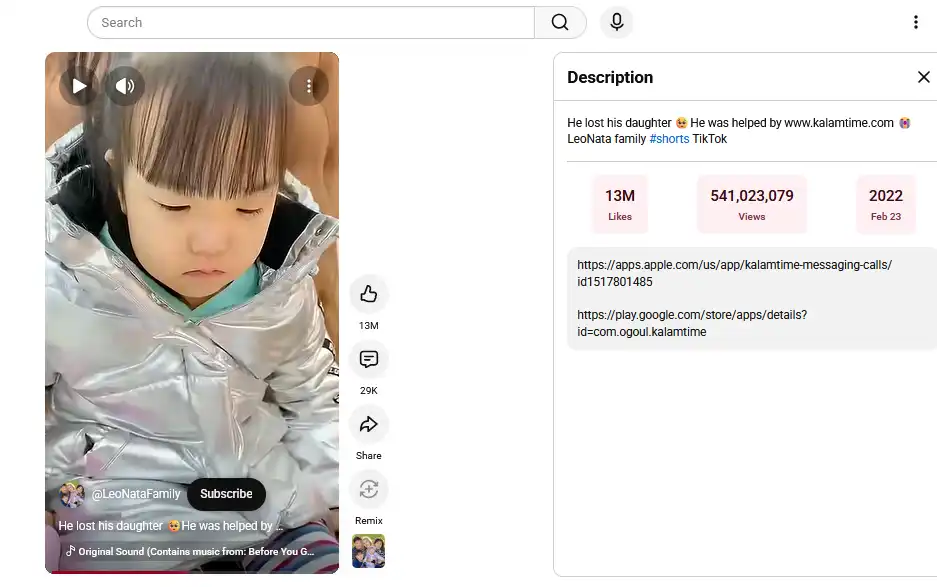
Here’s where it got interesting. With that much visibility, we redirected our paid ads. We targeted the same audience that had just seen the viral video. People were already familiar with the app. They had already seen it in action, from a creator they trusted. This made them far more likely to install.
The result was a CPI drop from 21 cents to under 4 cents per install. That’s a massive shift. And it happened globally, not just in one small market.
This is what happens when influencer marketing and paid ads work together, instead of running in separate lanes.
Why This Kind of Result Is Rare With Big Agencies
You won’t find many stories like this from large, traditional marketing firms. Here’s why.
- They rely on paid platforms alone. Google and Meta ads are treated as the whole strategy, not one part of it.
- They don’t build influencer networks. Managing creators takes time and relationships. Many big agencies skip this and stick to what’s easy to scale across many clients.
- High CPI becomes the norm. Without a creative layer like viral content, cost per install stays high. Clients accept it because they don’t see another option.
- Client turnover doesn’t hurt them. Losing one account barely affects a large agency’s bottom line. So there’s less urgency to fight for outsized results.
Smaller, growth-focused agencies don’t have this cushion. Every result matters. Every client’s success directly shapes the agency’s reputation and future.
Quick Checklist: How to Evaluate Any App Marketing Agency
Before you sign with anyone, run through this list:
- Do they ask about retention before talking about your ad budget?
- Can they show real case studies with actual numbers?
- Do they use channels beyond Google and Meta ads, like influencer marketing?
- Will the person you meet in the first call be the person managing your account?
- Do they explain where your budget actually goes?
- Do they offer a clear audit and plan before launching any campaign?
- Do they measure success by revenue and retention, not just installs?
If an agency checks most of these boxes, you’re likely looking at a real growth partner, not just another name on a list.
Final Thoughts
Being a top app marketing company was never about a directory ranking. It’s about what happens after the contract is signed. Who actually runs your campaigns. Where your budget actually goes. And whether the agency treats your app like a priority, or just another account.
At Remarkably Different, we’ve built our reputation on results, not placements. A 21-cent CPI dropped to under 4 cents wasn’t luck. It came from treating one client’s budget like it was the only one we had. That’s the difference between an agency chasing volume, and one chasing your actual growth.