
Ask three different developers to quote the same fitness app idea, and you’ll likely get three very different numbers. Why does fitness software development cost so wildly differently from one company to the next, even for what sounds like the same project on paper?
The honest answer is that most of the cost difference has nothing to do with quality. It comes down to a handful of decisions made early on, decisions most fitness business owners don’t even know they’re making until the invoice arrives.
Why Fitness Software Costs Vary So Much
A fitness app isn’t one product. It’s a bundle of separate systems, user accounts, workout libraries, payment processing, video streaming, wearable integrations, all built and connected together. Some developers quote based on a bare-bones version of that bundle. Others quote based on everything you might eventually want. Neither quote is wrong, but comparing them side by side without understanding what’s actually included is where most budget confusion starts.
This is also where the idea of custom fitness software solutions gets misunderstood. Many business owners assume “custom” automatically means expensive. In reality, custom development just means the software is built around your specific business model, rather than forcing your business to work around someone else’s template. Whether that ends up cheaper or more expensive depends entirely on what you actually need.
What Actually Drives Fitness Software Costs Up
A few specific choices tend to inflate a budget far more than people expect, and most of them have little to do with the software itself. The software is usually just one piece of a larger system, and the other pieces are where budgets quietly balloon.
Building Every Feature at Once
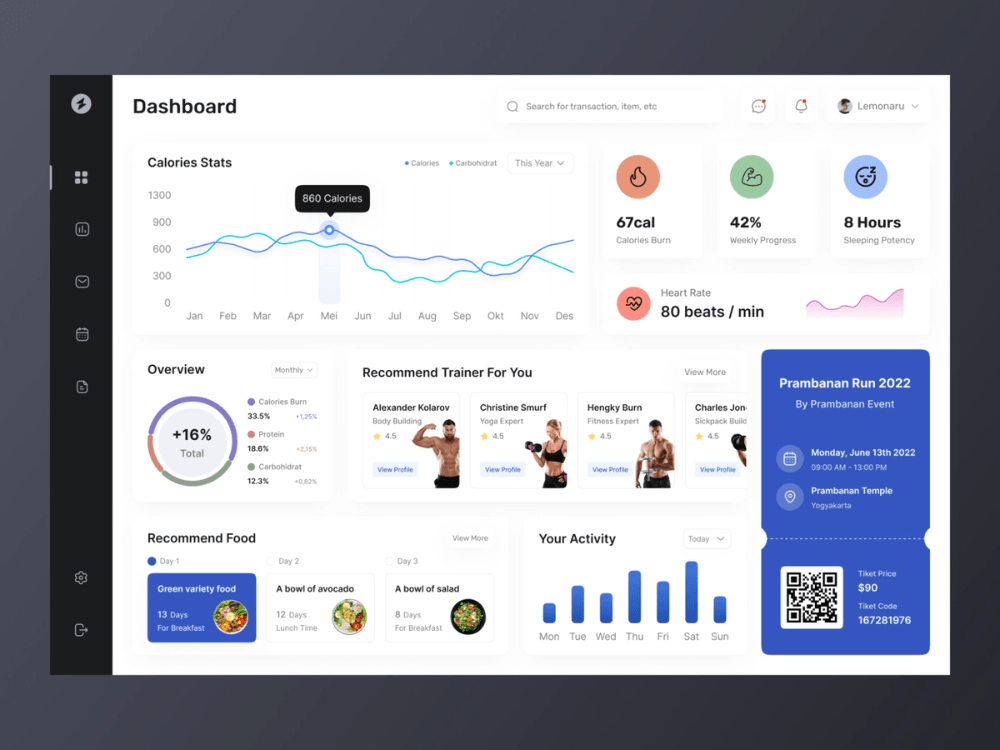
It’s tempting to launch with workout tracking, nutrition planning, wearable syncing, live coaching, booking management, and social features all in version one. Each of those is a separate development effort, whether it lives in the app, the admin side, or both. Launching with a smaller, focused feature set and expanding based on real usage is almost always cheaper, and often leads to a better product too.
Choosing the Wrong Platform Strategy
This one is specific to the app layer, but still worth planning carefully. Building separate native apps for iOS and Android essentially doubles a large portion of development work. Cross-platform frameworks can dramatically reduce that cost for many fitness apps, though not every feature translates equally well across both, so this decision needs to match your actual use case.
Underestimating the Backend and Admin Side
This is where a lot of fitness businesses get caught off guard. The app is what users see, but someone on your team also needs a way to manage classes, members, staff schedules, and billing. That admin dashboard or gym management system is a full development effort of its own, sometimes a bigger one than the app itself, and it’s easy to forget to budget for it until it’s already needed.
Treating Integrations as an Afterthought
Wearable device syncing, payment processors, video streaming, and third-party APIs all need to be planned for early. Adding these integrations after the core system is already built is almost always more expensive than designing around them from the start, since retrofitting often means reworking parts of the system that were never built to accommodate them.
Skipping Proper Planning
Projects that start building before the full scope is mapped out, across the app, the backend, and the admin tools, tend to run into expensive mid-project changes. A clear plan upfront, exactly which features matter most, how the system should scale, what integrations are truly necessary, prevents costly rework later.
Ignoring Long-Term Maintenance
Some businesses only budget for the initial build and get caught off guard by ongoing hosting, updates, and security costs, for the app and the systems behind it. A cheaper upfront quote that ignores these costs isn’t actually cheaper, it’s just delayed spending.
Is There a Way to Get Fitness Software Development Without Overspending?
This is usually the real question underneath “how much does this cost.” Most fitness businesses aren’t trying to cut corners, they’re trying to avoid paying for complexity they don’t actually need yet.
The most reliable way to control cost is starting with a clearly defined core version of the app, the features your users genuinely can’t do without, and treating everything else as a planned future addition rather than a day-one requirement. This approach tends to cut initial development costs significantly while still leaving room to grow the platform as the business grows alongside it.
Choosing the right development partner matters just as much as the feature list. A team experienced specifically in fitness platforms, like Remarkably Different, already understands the common pitfalls, wearable integration quirks, video streaming performance issues, subscription billing edge cases. That experience helps avoid mistakes that inexperienced teams often learn the expensive way, mid-project.

Off-the-Shelf vs. Custom: Which Actually Costs Less?
It depends on what “less” means to your business. Off-the-shelf platforms often look cheaper upfront, but they come with limitations, licensing fees that grow as your user base grows, restricted branding, and features you can’t fully control. Over a few years, those recurring costs and limitations can add up to more than a custom build would have cost from the start.
Custom fitness software solutions tend to make more financial sense once a business has a clear enough vision to know what it actually needs, and plans to run the platform for the long term rather than testing an idea briefly. For an early-stage idea still being validated, a simpler, faster off-the-shelf approach might genuinely be the smarter first step.
A Realistic Way to Plan Your Budget
Rather than asking “what will this cost,” a more useful starting question is “what does the first version actually need to prove itself.” From there, a realistic budget usually breaks down into three parts: the core build, a smaller reserve for adjustments after real users start interacting with it, and an ongoing monthly amount for hosting, support, and updates. Businesses that plan for all three from the beginning tend to avoid the unpleasant surprises that make fitness software development feel more expensive than it needed to be.
Build Cost-Effective Fitness Software With Remarkably Different
Most development agencies quote high because they’re building in inefficiency, layers of management, unnecessary meetings, and features nobody asked for, then passing that cost onto you. Remarkably Different works differently. We start every fitness software project by identifying exactly what your core users need first, so you’re not paying to build features that won’t matter until much later, if ever.
Our development team has hands-on experience with the specific technical challenges fitness platforms run into, wearable device syncing, subscription billing, video streaming performance, so we avoid the costly mistakes that come from learning on your dime. Whether you need a lean MVP to validate an idea or a fully custom fitness platform built to scale, we build lean, efficient, and priced for what you actually need, not what pads our invoice.
If you’re ready to build fitness software without the inflated agency overhead,